
Nutrition
The History and Benefits of Arabian Dates
Desert & Co · 5 September 2026
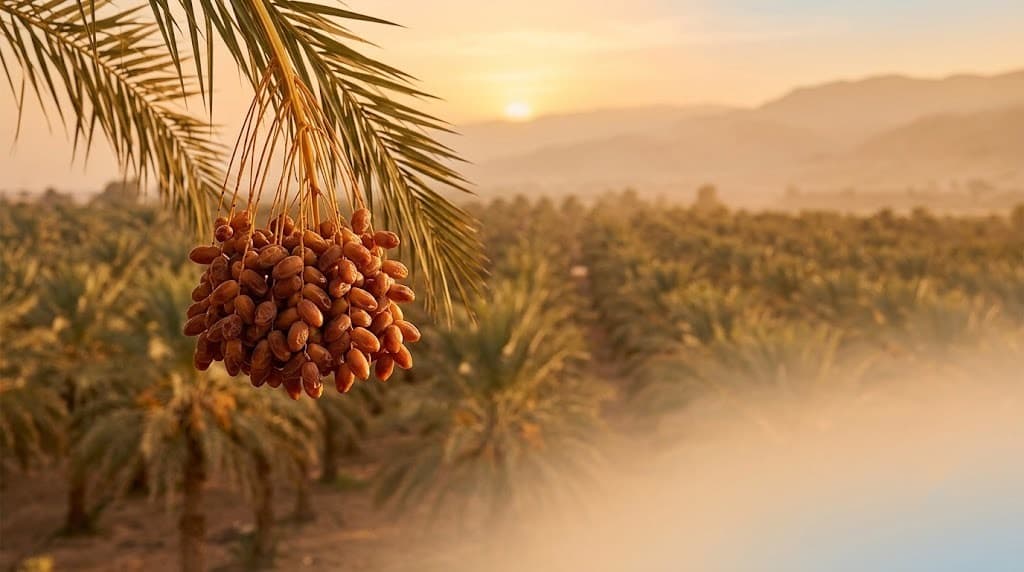
Long before dates became a Ramadan table staple, they were one of the few crops that could reliably feed people living where almost nothing else would grow. Archaeological evidence places date palm cultivation in the Arabian Peninsula and Mesopotamia back roughly 5,000-7,000 years — among the oldest cultivated fruit trees anywhere. A date palm can survive brutal heat, needs comparatively little fresh water once established, and produces fruit for decades, which is exactly why oasis settlements across Arabia grew up around them rather than around grain.
A working food, not a treat. For desert-travelling communities and traders, dried dates were calorie-dense, didn't spoil on long journeys, and needed no cooking — closer to a trail ration than a dessert. That practicality is also why dates became woven into hospitality customs across the Arab world: offering dates and coffee to a guest wasn't ceremony for its own sake, it was offering the most reliable food a household had on hand.
Why iftar specifically. Breaking the day's fast with dates during Ramadan is often framed as purely religious tradition, and there's a real practical logic underneath it too: after a full day without food or water, something that digests quickly and restores blood sugar gently — natural sugars plus fibre, rather than refined sugar alone — is a genuinely sensible way to start eating again before a full meal.
What the nutrition actually supports. Stripping out the exaggerated "superfood" language you'll see elsewhere: dates are a good source of dietary fibre (roughly 6-8g per 100g) and potassium, with smaller amounts of magnesium and copper. Their sweetness comes from fructose and glucose rather than added sugar, which is a fair reason to prefer them over refined sweets — but they're still calorie-dense, so portion still matters if you're watching intake. There's no credible evidence dates cure or prevent any specific disease; the honest claim is that they're a nutritious way to satisfy a sweet craving, and that's a strong enough claim on its own.
Different regions, different varieties — for a reason. Medjool spread from Morocco and is now grown widely including the Jordan Valley; Ajwa is cultivated specifically around Madinah and carries particular cultural and religious significance there; Safawi is also a Madinah variety, denser and more travel-hardy. These aren't arbitrary brand names — they reflect centuries of different oases selecting for the traits that mattered to them, whether that was sweetness, shelf life, or how well the fruit traveled.
Ready to taste the difference?
Shop the collection